
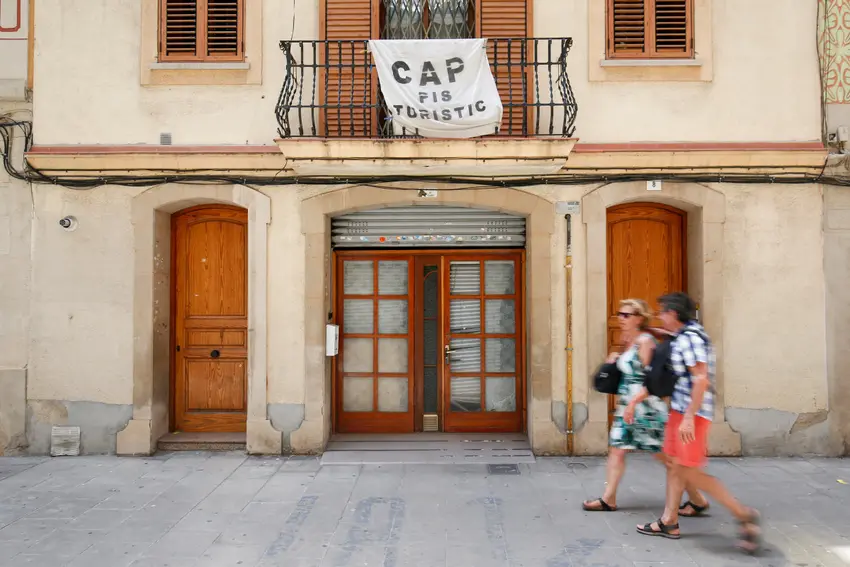
The move comes amidst a growing backlash against over-tourism and booming short-term holiday lets, which many locals blame for soaring rents and a shortage of affordable housing.
The investigation "targets companies that manage hundreds of tourist homes" across the country "that could be engaging in misleading practices" or other consumer law violations, the consumer rights ministry said in a statement.
READ ALSO: Spain eyes making tourist rentals less lucrative by charging owners VAT
These companies have been accused of pretending to be private individuals when listing properties on online sites such as Airbnb and Booking.com to attract potential customers.
They "create a different profile" for each flat, often falsely claiming to belong to an "ideal family" to make the property more appealing, Patricia Suarez, head of consumer rights association Asufin, told Spanish public television TVE.
Consumer Rights Minister Pablo Bustinduy said this could be a case of "misleading commercial practices" that could "undermine the right to housing in Spain".
The latest probe comes after his ministry announced in June that it would investigate listings on online holiday flat platforms to verify if they have licences.
Spain is the world's second-most visited country after France and estimates point to a record of around 95 million visitors this year, or double Spain's population.
Anti-tourism protests have multiplied in recent months across the country, prompting authorities to try to reconcile the interests of locals and the lucrative sector.
Barcelona has said it will ban all holiday apartments by 2028 while the southern city of Málaga has banned new short-term apartment rentals to tourists in 43 neighbourhoods.
Comments